
Experience Overview
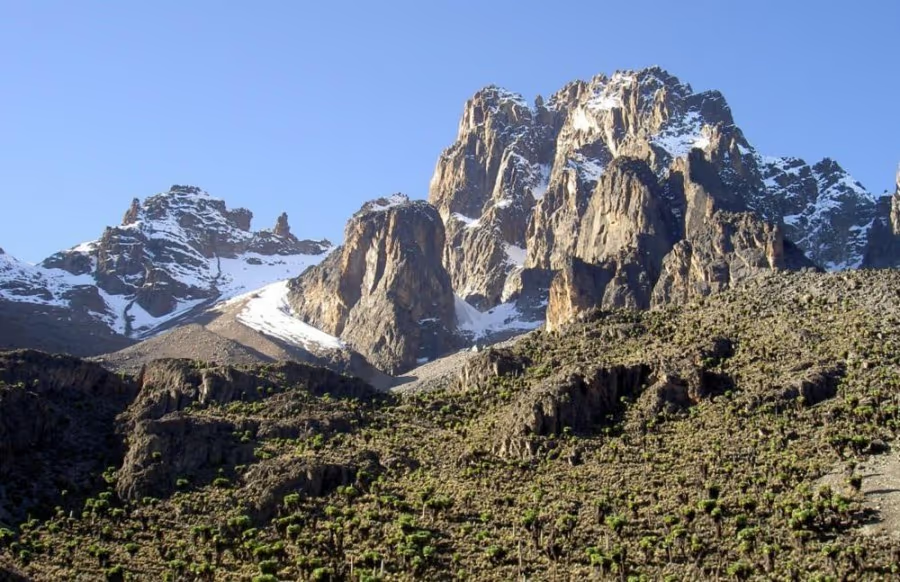
Trekking Mount Kenya is one of
East Africa's most rewarding and multi-dimensional outdoor adventures — a
journey through five distinct ecological zones, from dense montane forest alive
with wildlife through bamboo groves, heathland, extraordinary afro-alpine
moorland, and finally the glaciated summit peaks that give Kenya its name. At
5,199 metres, Mount Kenya is Africa's second-highest mountain, a UNESCO World
Heritage Site, and the sacred heartland of the Kikuyu, Meru, and Embu peoples.
Three main trekking routes offer contrasting approaches: the Sirimon route on
the northwest is the most gradual and recommended for acclimatisation; the Naro
Moru route on the west is the most direct but steepest; and the Chogoria route
on the east is universally considered the most scenically breathtaking,
descending through the spectacular Hall Tarns and the giant lobelias of the
upper moorland. Point Lenana at 4,985 metres — reached on the third or fourth
day of a standard trek — is the highest non-technical summit and is accessible
to any fit, determined trekker with proper acclimatisation. The pre-dawn summit
push for sunrise views over the surrounding plains is a moment of intense
personal achievement. The technical peaks of Batian (5,199m) and Nelion
(5,188m) require multi-pitch rock and ice climbing skills and attract serious
mountaineers from around the world, offering some of the continent's finest
alpine routes.
What to Expect & Prepare
What's Included
- Contact us for details.
What to Bring
- Standard travel gear.
Frequently Asked Questions
Activity Location
Location & Access
Mount Kenya National Park
Physical Intensity
Inclusive of all taxes & fees
Assistance
+255 754 004 223
Ethical
Standards
Safe &
Secure