
Experience Tsavo West National Park
Tsavo West National Park covers
approximately 9,065 square kilometres of extraordinarily diverse and dramatic
landscape in southeastern Kenya — forming the western half of the Tsavo
Conservation Area, Africa's largest protected ecosystem. While Tsavo East is
characterised by open semi-arid plains and riverine habitats, Tsavo West offers
dramatically more varied and scenic terrain — a mosaic of volcanic hills,
ancient lava flows, springs, savannah, and dense riverine bush that creates a
complex and visually spectacular wilderness. The park's centrepiece and most
celebrated attraction is the Mzima Springs — a series of crystal-clear pools
fed by volcanic aquifers originating in the Chyulu Hills, producing an
astonishing 50 million gallons of pristine water per day that supports dense
concentrations of hippopotamus, Nile crocodile, and remarkable underwater life
visible from an extraordinary subterranean viewing chamber. The Shetani lava
flow — a stark, jet-black expanse of volcanic rock created by an eruption only
200 years ago — and the adjacent Chaimu Crater are among East Africa's most
remarkable geological landmarks, contrasting dramatically with the surrounding
green savannah. The Ngulia Rhino Sanctuary within the park provides intensive
protection for Kenya's critically endangered black rhino. Tsavo West combines
conveniently with Amboseli and the coast for extended southern Kenya
itineraries.
Explore on Map
Iconic Highlights
• Mzima Springs — crystal pools with underwater hippo and crocodile viewing
• Shetani lava flow — 200-year-old jet-black volcanic landscape
• Ngulia Rhino Sanctuary protecting Kenya's black rhino
• Exceptional habitat diversity — more scenic than Tsavo East
• Chaimu Crater volcanic feature with panoramic views
• Excellent accessibility from Mombasa and Amboseli
• Ngulia Lodge — famous for dramatic raptor migration
Wildlife & Nature
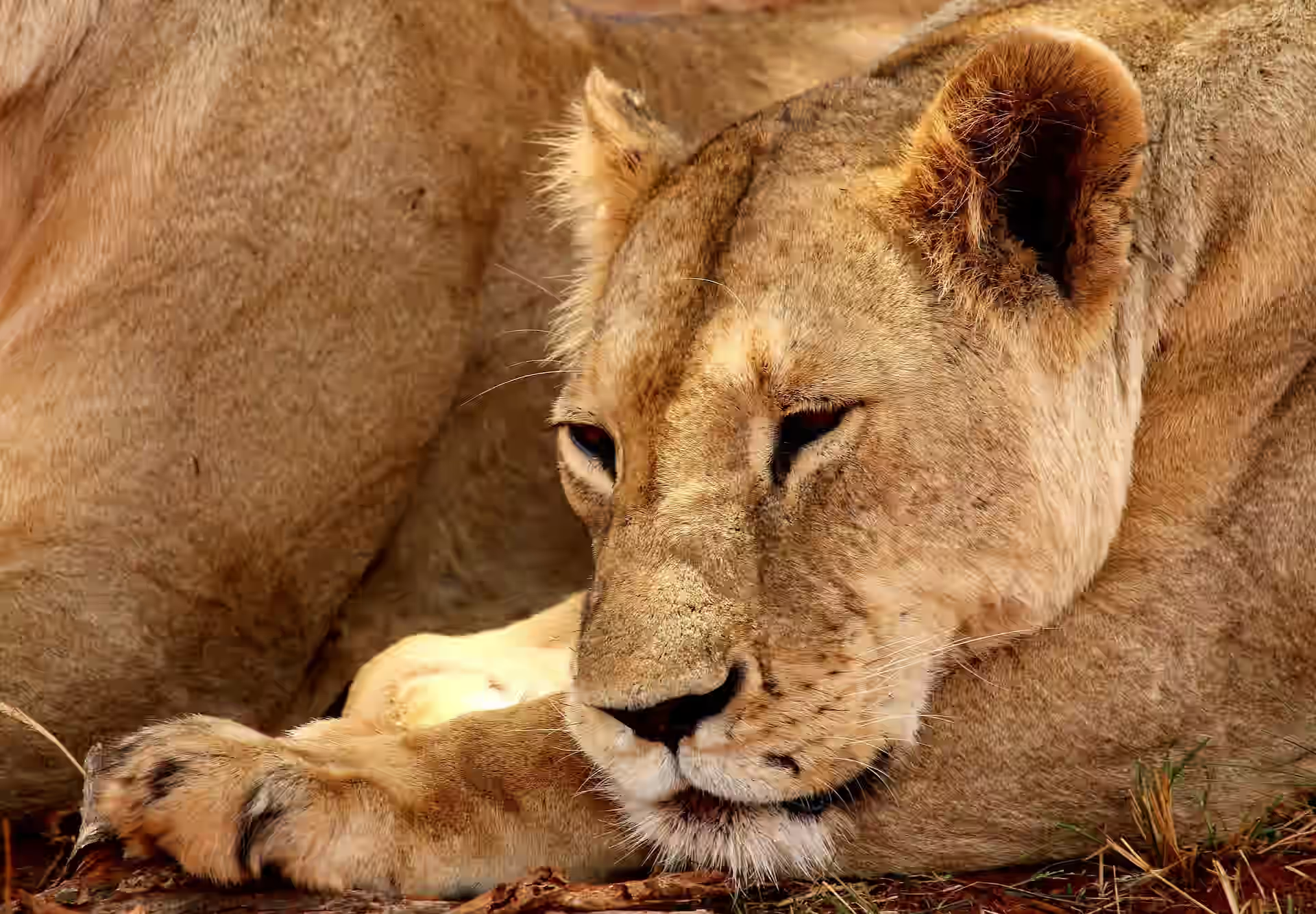
Lion
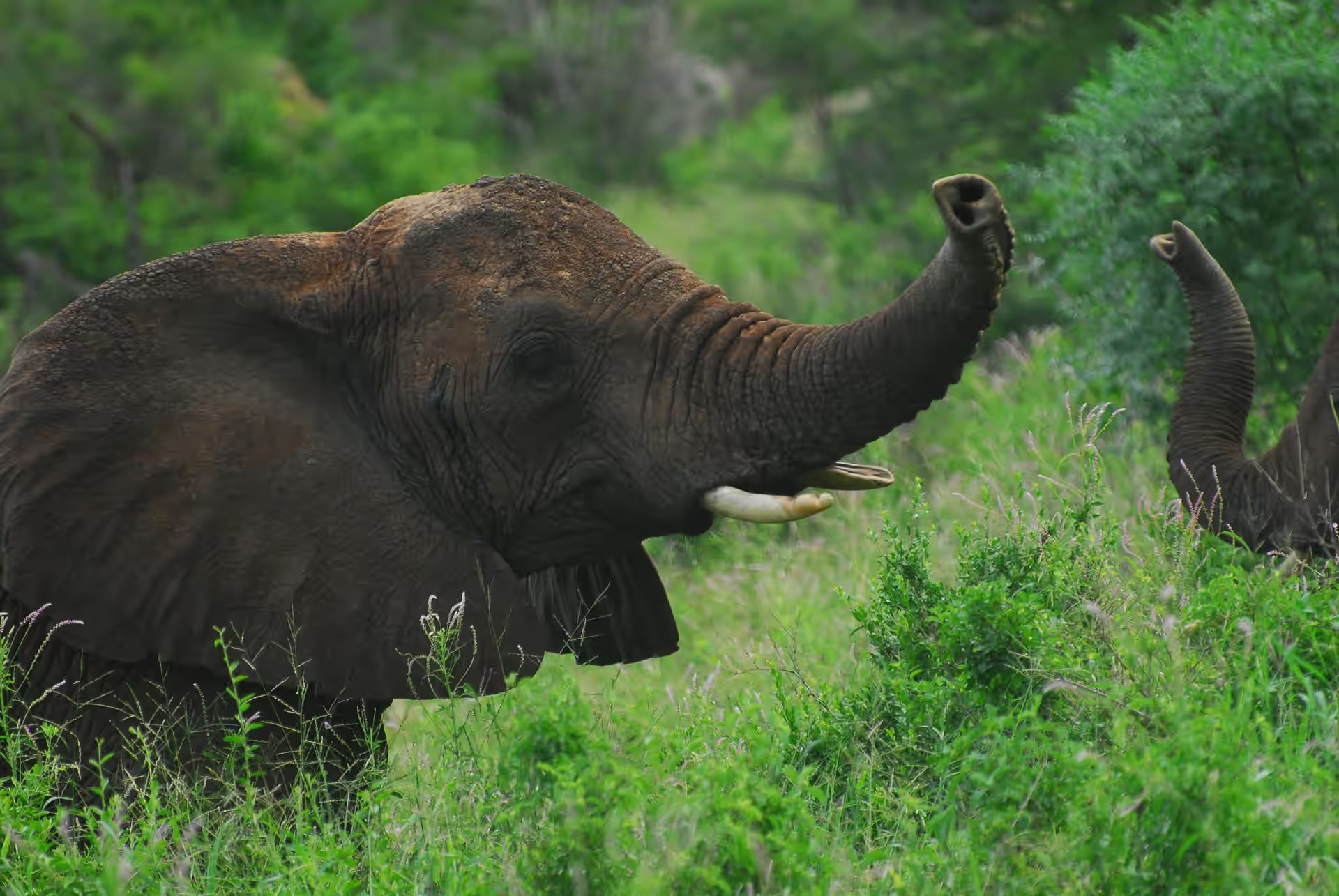
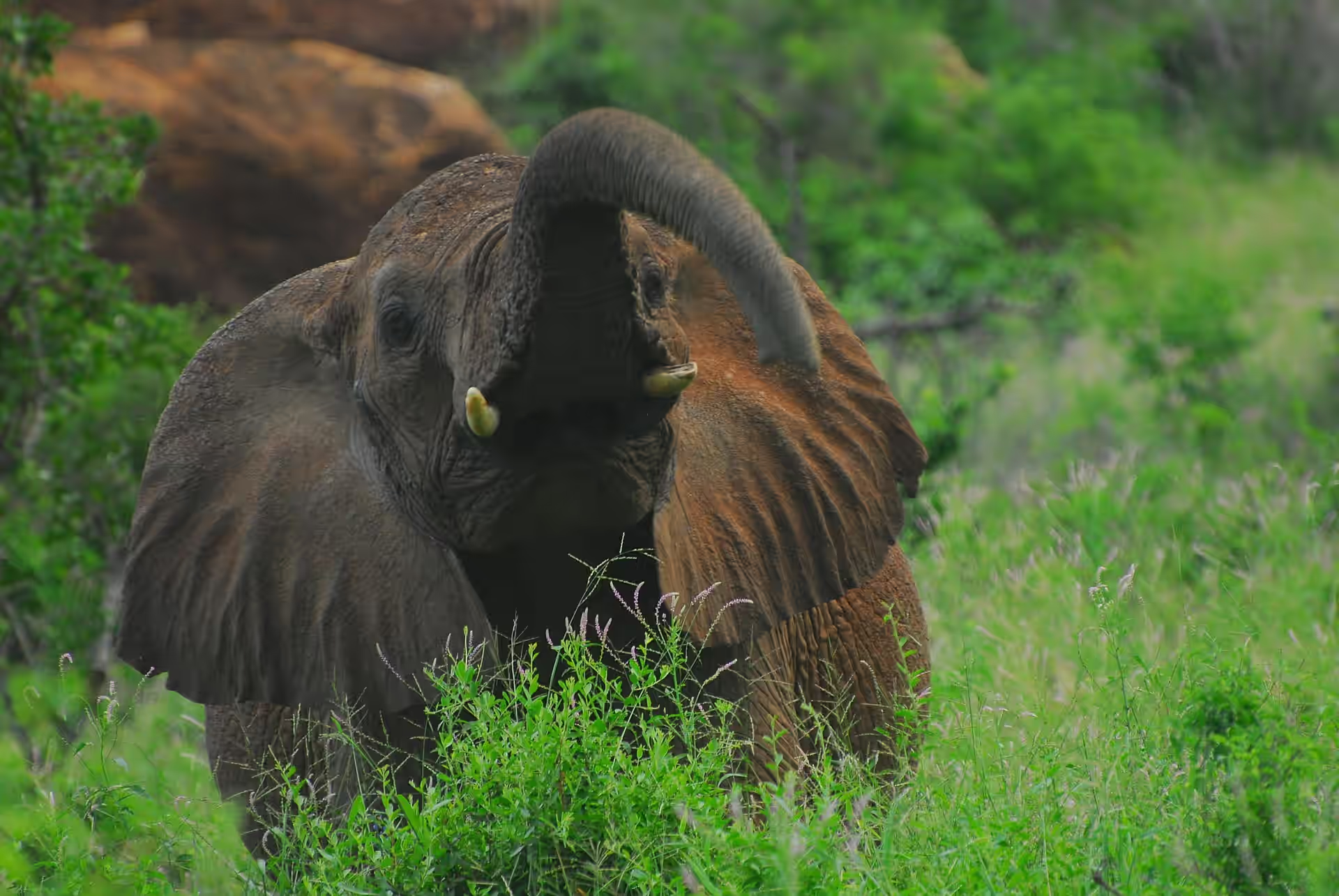
Elephant
Leopard
Rhino
Buffalo
Cheetah
Giraffe
Zebra
Wildebeest
Hippo
Photo Gallery
Climate & When to Visit
Best Time to Visit
Monthly Averages
| Month | Temp High | Temp Low | Rainfall |
|---|---|---|---|
| Apr | 28°C | --°C | -- mm |
| Aug | 30°C | --°C | -- mm |
| Dec | 31°C | --°C | -- mm |
| Feb | 32°C | --°C | -- mm |
| Jan | 31°C | --°C | -- mm |
| Jul | 28°C | --°C | -- mm |
| Jun | 27°C | --°C | -- mm |
| Mar | 31°C | --°C | -- mm |
| May | 27°C | --°C | -- mm |
| Nov | 30°C | --°C | -- mm |
| Oct | 31°C | --°C | -- mm |
| Sep | 31°C | --°C | -- mm |
Travel Requirements
Tsavo West National Park charges
KWS entry fees of approximately USD 52 per person per day for non-resident
adults, payable via eCitizen. The park is served by Kilaguni and Finch Hatton
airstrips, accessible by light aircraft from Wilson Airport in Nairobi
(approximately 1 hour) or Mombasa (approximately 30–40 minutes). Road access
from Mombasa takes approximately 3 hours and from Nairobi approximately 4–5
hours via the Nairobi–Mombasa highway. A valid passport and Kenya eTA are
required for international visitors. Malaria prophylaxis is essential for this
low-altitude environment. Tsavo West combines perfectly with Amboseli National
Park for a southern Kenya safari circuit.