
Experience Tsodilo Hills
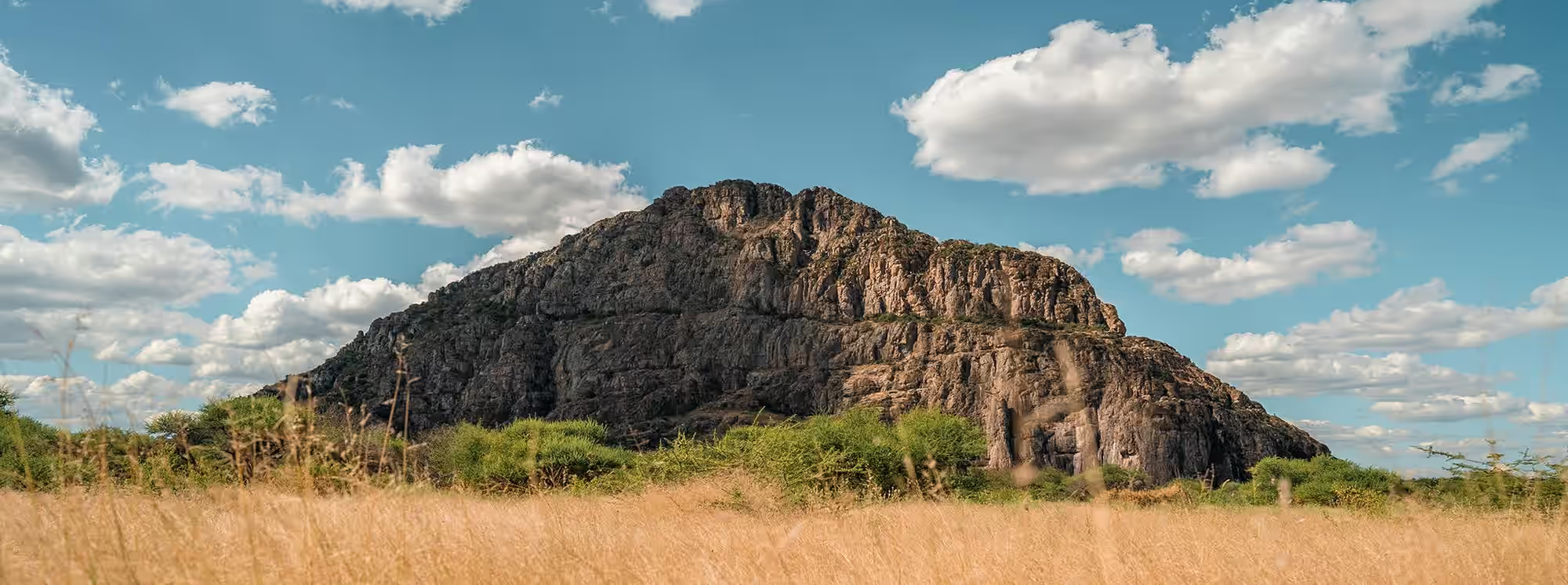
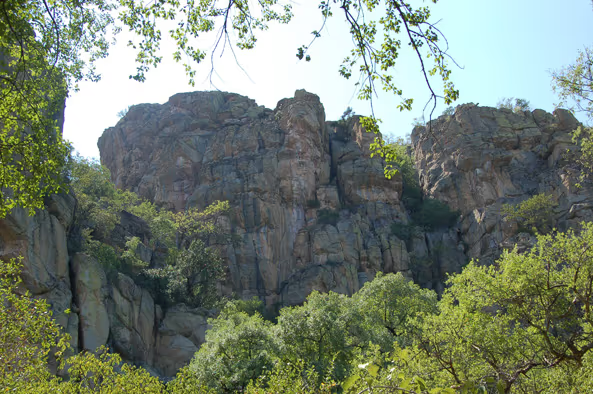
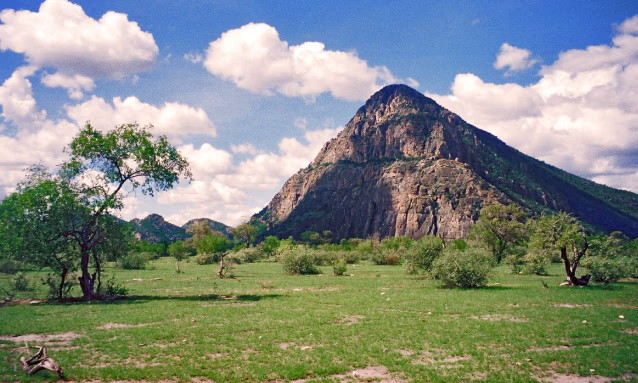
Rising abruptly from the flat Kalahari sandveld in the remote
northwest of Botswana, the Tsodilo Hills form a cluster of four quartzite hills
— known to the San as Male, Female, Child, and a small unnamed outcrop. The
hills reach a maximum height of 410 metres above the surrounding plain and are
visible from vast distances across the desert, making them a natural landmark
of extraordinary power and presence.
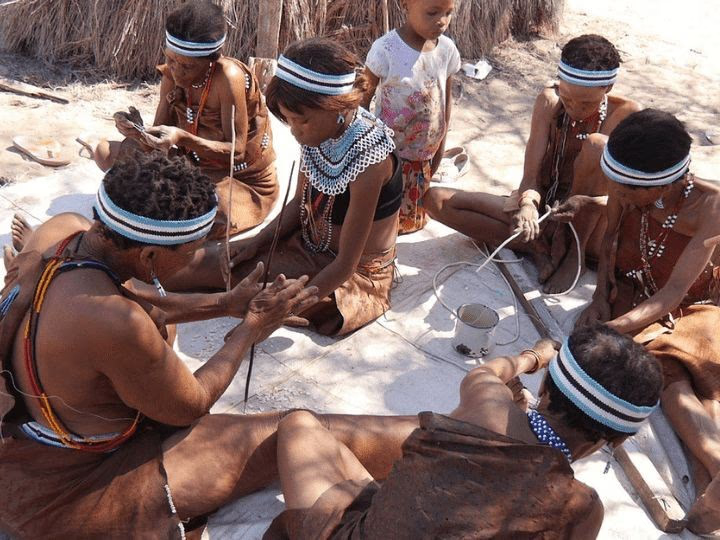
The San people of the Kalahari regard Tsodilo as the location
of the world's first creation, the dwelling place of ancestral spirits, and the
site where the first human beings lived. This sacred significance is expressed
through an extraordinary concentration of rock art — over 4,500 individual
paintings on the surface of the hills, depicting animals, people, spiritual
figures, and abstract symbols across a span of at least 24,000 years. The
density and quality of the art makes Tsodilo comparable to the great rock art
sites of Lascaux in France or Altamira in Spain.
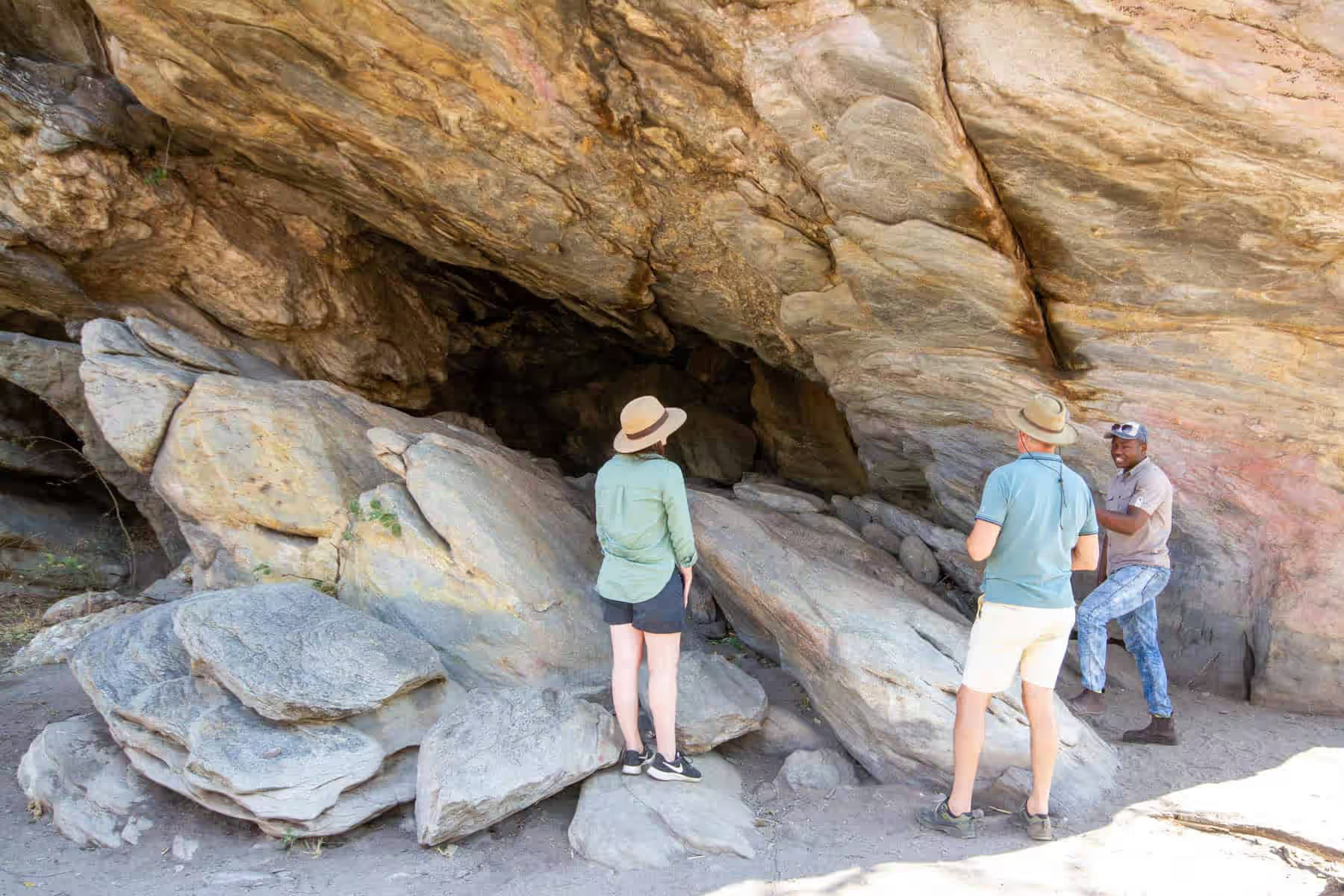
Visitors explore the hills on foot along a network of guided
trails, accompanied by local San guides who interpret the paintings and share
oral histories passed down through generations. Among the most significant
images are a school of fish painted in red ochre, believed to represent ancient
spiritual ceremonies, and a large rhinoceros panel on the Female Hill that
dates back thousands of years.
Tsodilo is also of significant geological interest. The area
around the hills has yielded evidence of human habitation dating back to
100,000 years ago, including the world's oldest known ritual object — a python
carved into rock — discovered in a cave at the base of the Female Hill. This
extraordinary find suggests that Homo sapiens were conducting complex spiritual
rituals far earlier than previously believed.
Explore on Map
Things to Do
Iconic Highlights
• UNESCO World Heritage Site — one of humanity's greatest cultural treasures
• Over 4,500 rock art paintings spanning 24,000 years of human history
• Sacred San cultural site with guided interpretation by local community
• World's oldest known ritual object — the python of Tsodilo
• Dramatic quartzite hills rising 410m from the Kalahari flats
• Rare geological and archaeological insight into ancient human civilisation
Wildlife & Nature
Leopard
Zebra
Photo Gallery
Climate & When to Visit
Best Time to Visit
Monthly Averages
| Month | Temp High | Temp Low | Rainfall |
|---|---|---|---|
| Apr | 30°C | --°C | -- mm |
| Aug | 25°C | --°C | -- mm |
| Dec | 35°C | --°C | -- mm |
| Feb | 35°C | --°C | -- mm |
| Jan | 34°C | --°C | -- mm |
| Jul | 21°C | --°C | -- mm |
| Jun | 22°C | --°C | -- mm |
| Mar | 33°C | --°C | -- mm |
| May | 26°C | --°C | -- mm |
| Nov | 35°C | --°C | -- mm |
| Oct | 34°C | --°C | -- mm |
| Sep | 30°C | --°C | -- mm |
Travel Requirements
- Valid passport with at
least 6 months validity beyond travel dates
- Visa-free entry for most
nationalities; check requirements for your country
- Yellow fever vaccination
certificate required if travelling from endemic countries
- Park entry fees payable in
USD or Botswana Pula at park gates
5. Valid passport with at least 6 months validity
6. Park entry fees required — payable at South
Gate or North Gate
7. 4WD vehicle essential for self-drive; roads
flood during the wet season
8. Booking permits required for camping at
Third Bridge and Xakanaxa
- Valid passport with
minimum 6 months validity beyond travel dates
- Travel insurance strongly
recommended; medevac cover essential for remote camps